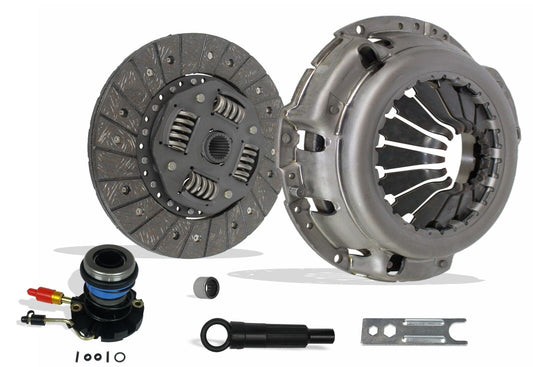
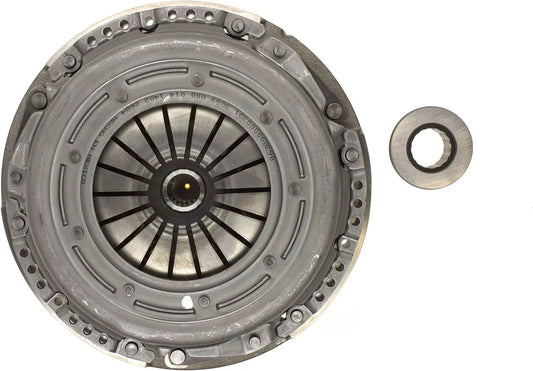
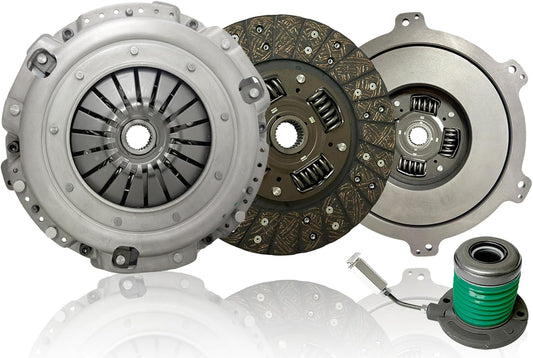
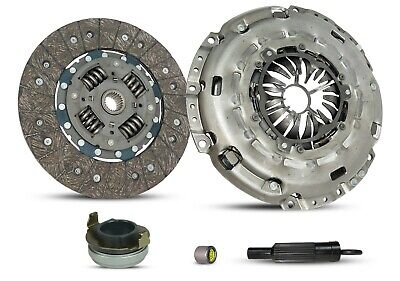
Why are there springs in the middle of a clutch disc?

Pick up a photo of a clutch disc and trace a line inward. First comes the wide ring of friction material. In the middle is a hub with teeth on the inside. On many discs, a set of short coil springs sits in windows between the two. Why put springs in a part whose job is to transmit power?
Engine power comes in pulses
A running engine feels continuous from the driver's seat, but each cylinder adds a push as it fires. On a sprung-hub disc, the outer part of the disc can turn slightly relative to the hub. That small movement compresses the springs. Think of a sudden twist at one end of the disc becoming a more gradual push at the gearbox input shaft.
Two springs with different jobs
Look at a kit photo. The short coils around the center of the friction disc help smooth twisting vibrations. The ring of metal fingers on a typical diaphragm pressure plate works in a different direction. Pressing the clutch pedal operates the release mechanism, which acts on those fingers to relieve the clamping force. One feature deals with rotation. The other lets you disengage the clutch to shift.
What if the replacement disc has a solid center?
Rigid-hub discs exist too. If the disc in a listing looks different from the one that came out, use the vehicle's engine, transmission and flywheel configuration to verify the application. Counting springs in a photo cannot establish fit.
Technical references · SACHS clutch catalog and LuK guide to torsional damping.